What the world actually searches for
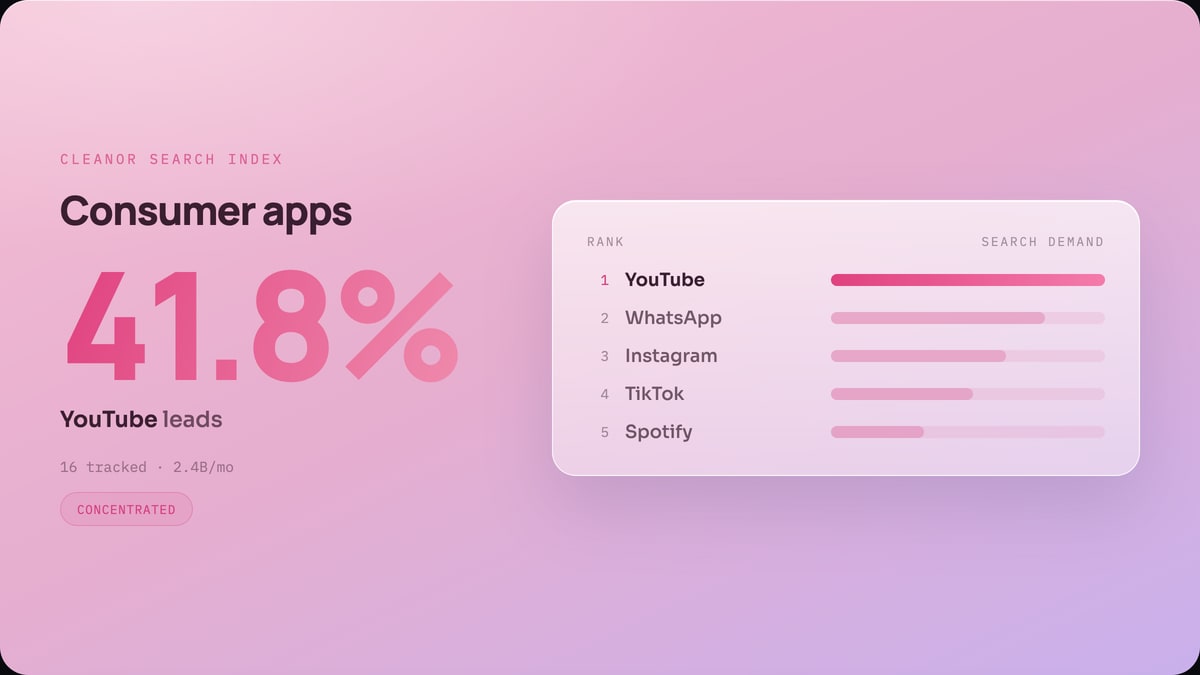
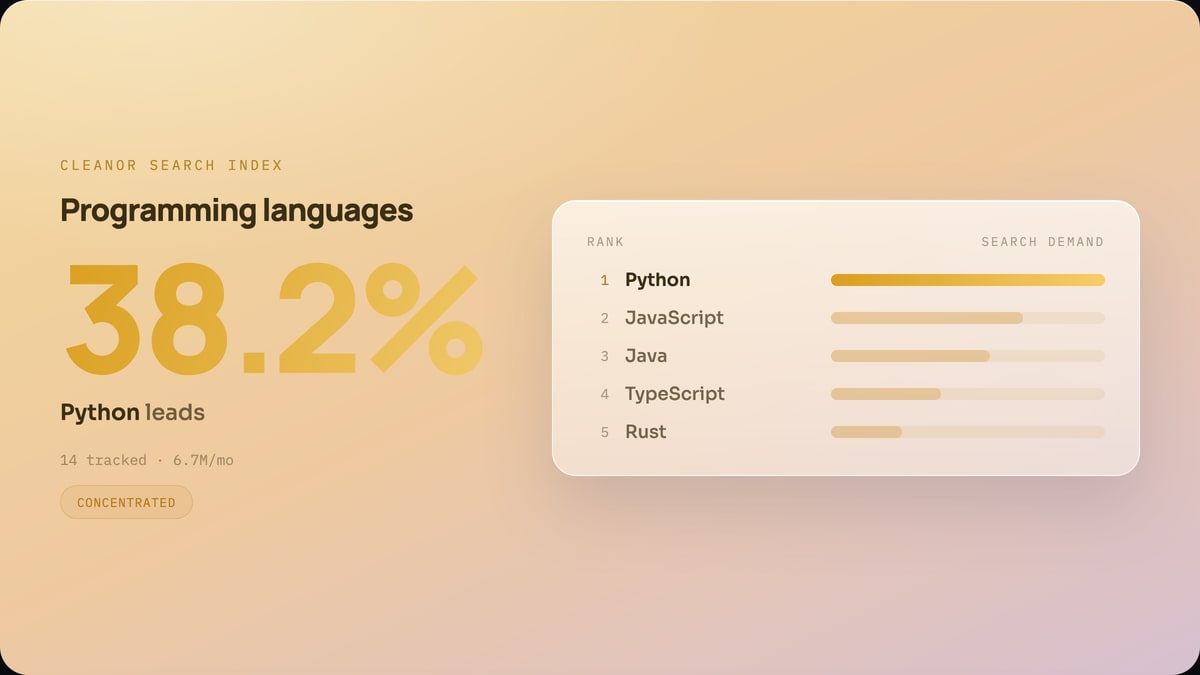
A catalog of monthly studies that rank tools and technologies by real Google search demand, worldwide and broken down by country. Every study is built from the same open, reproducible pipeline and published as free data you can download, cite and share. Updated Aug 2026.
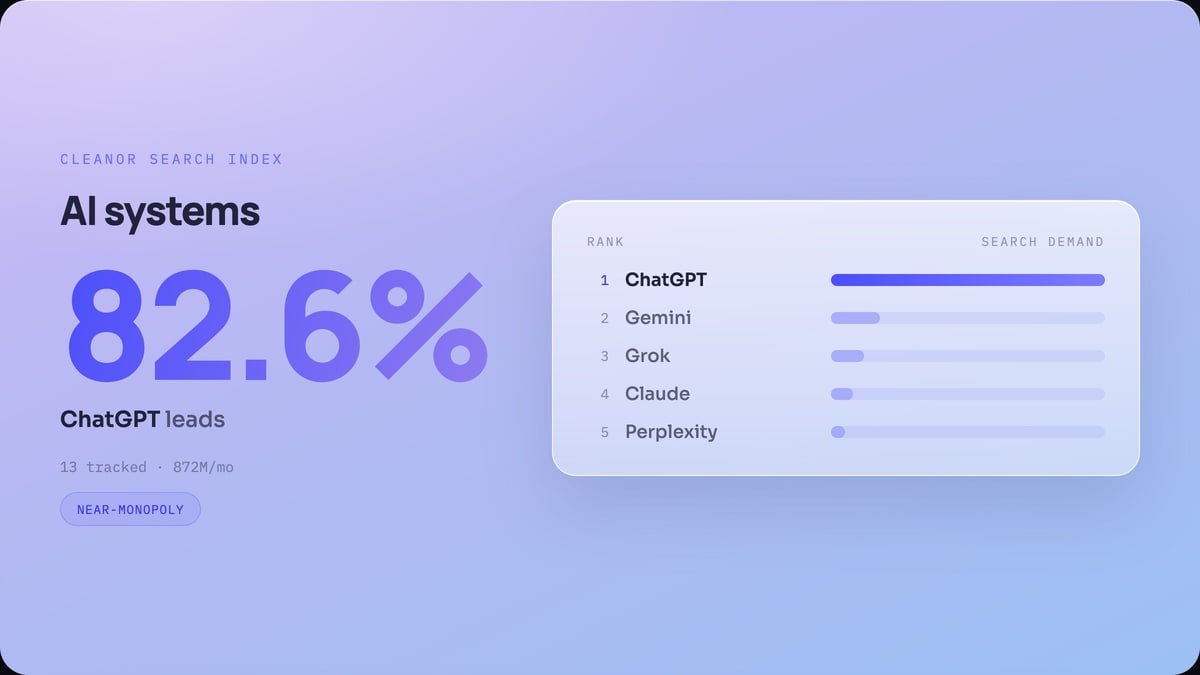
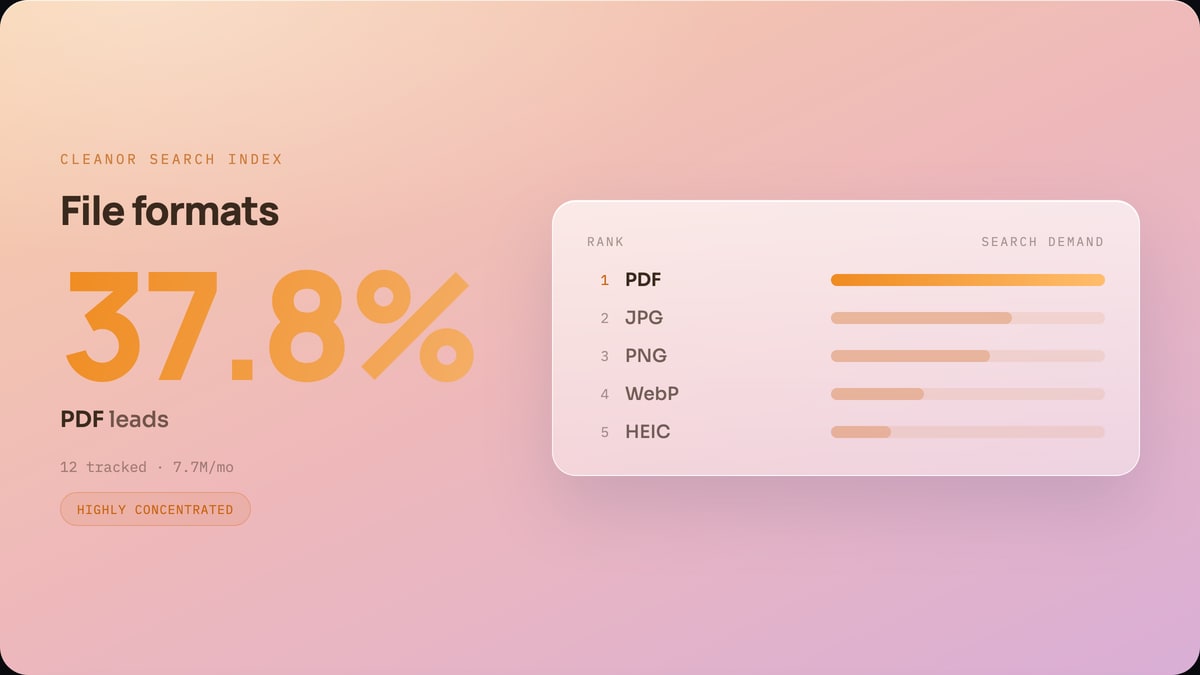
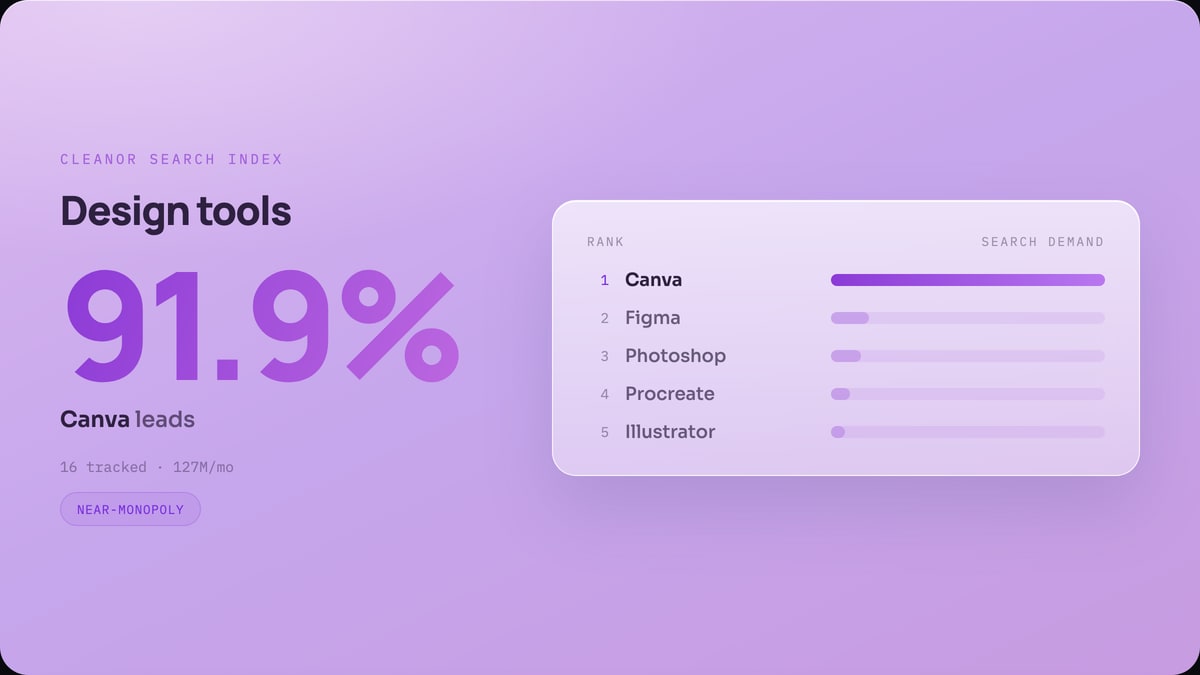
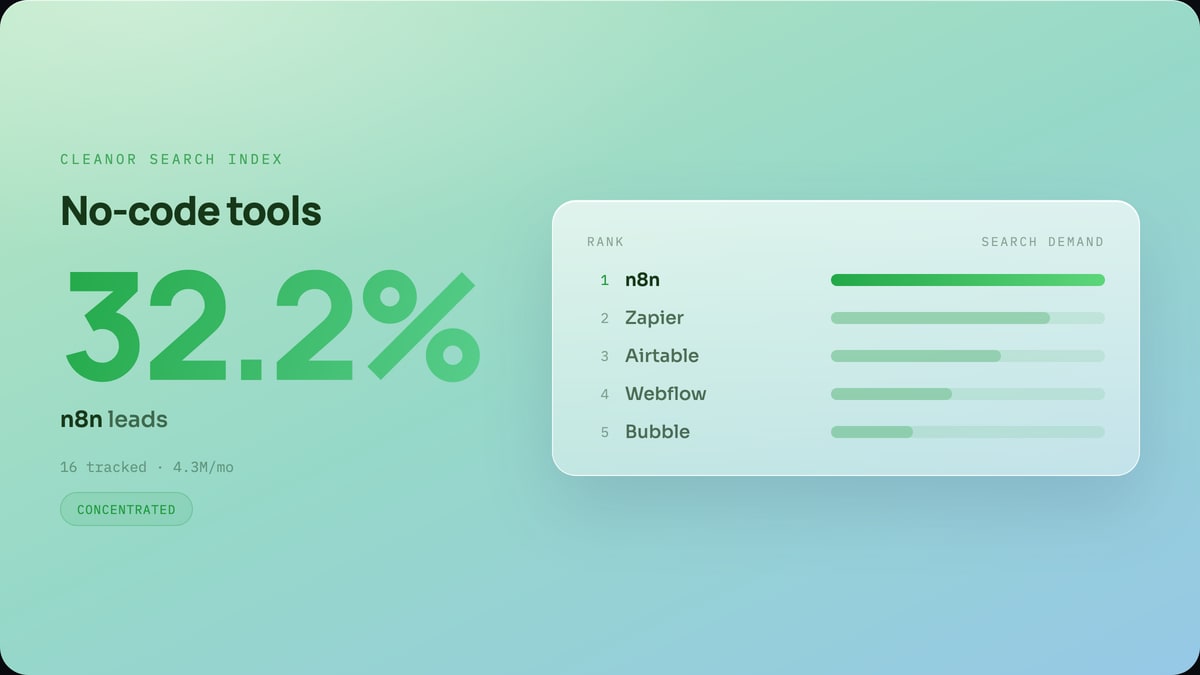
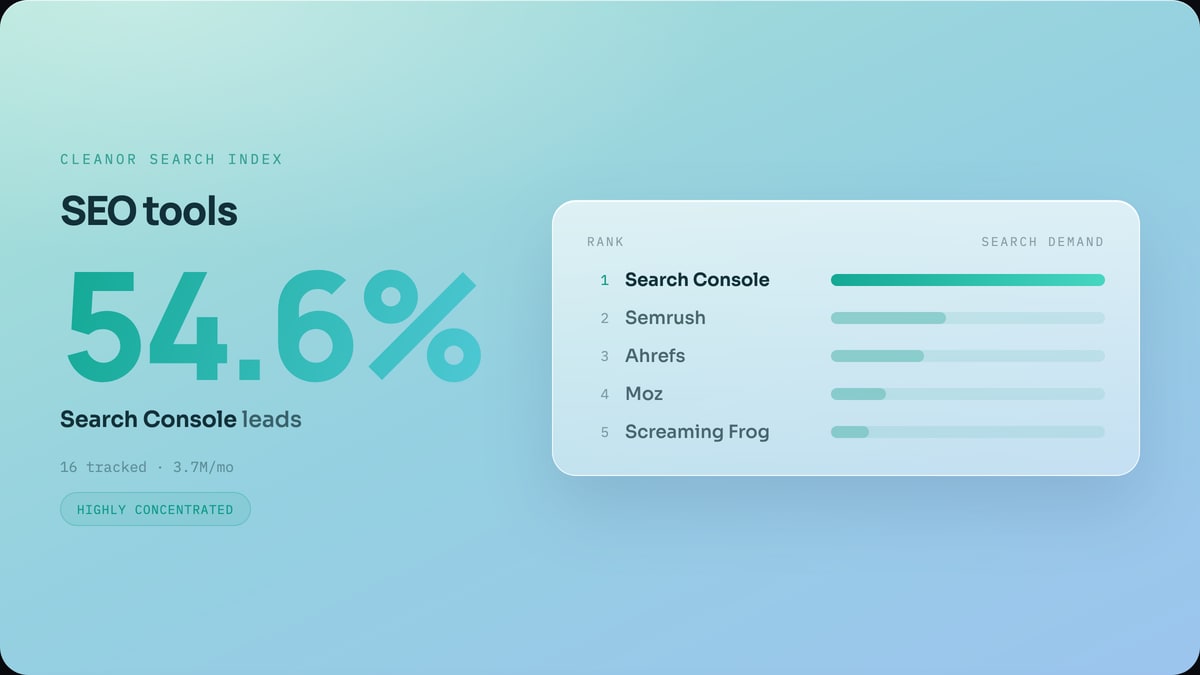
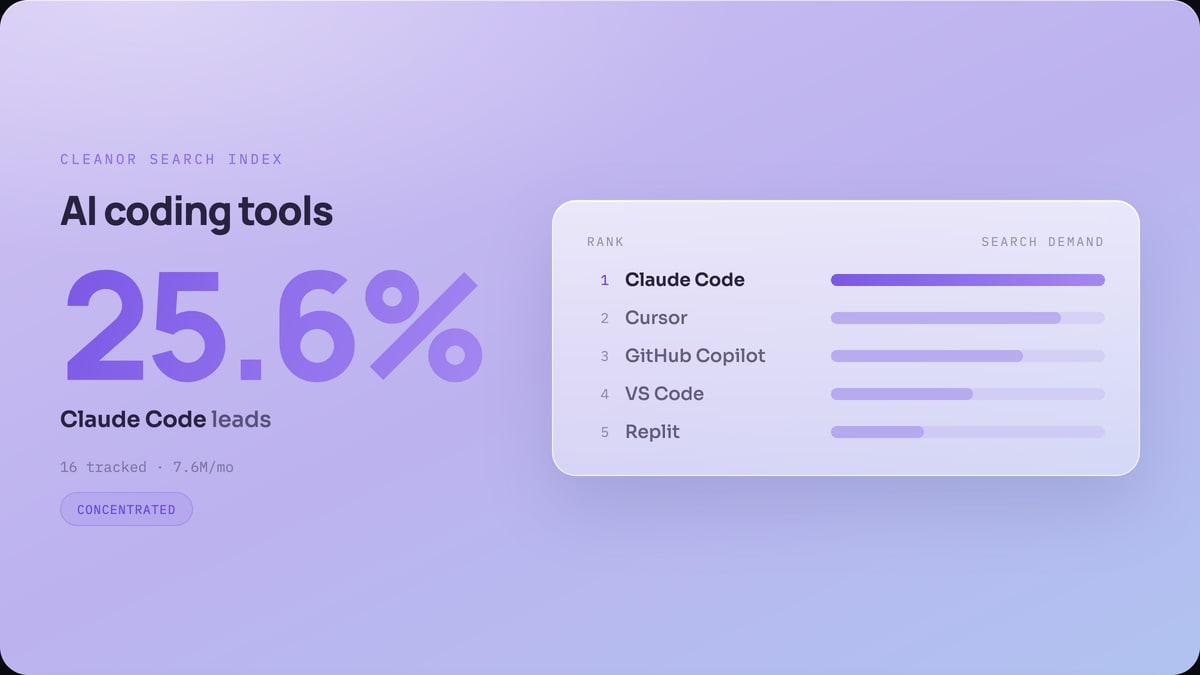
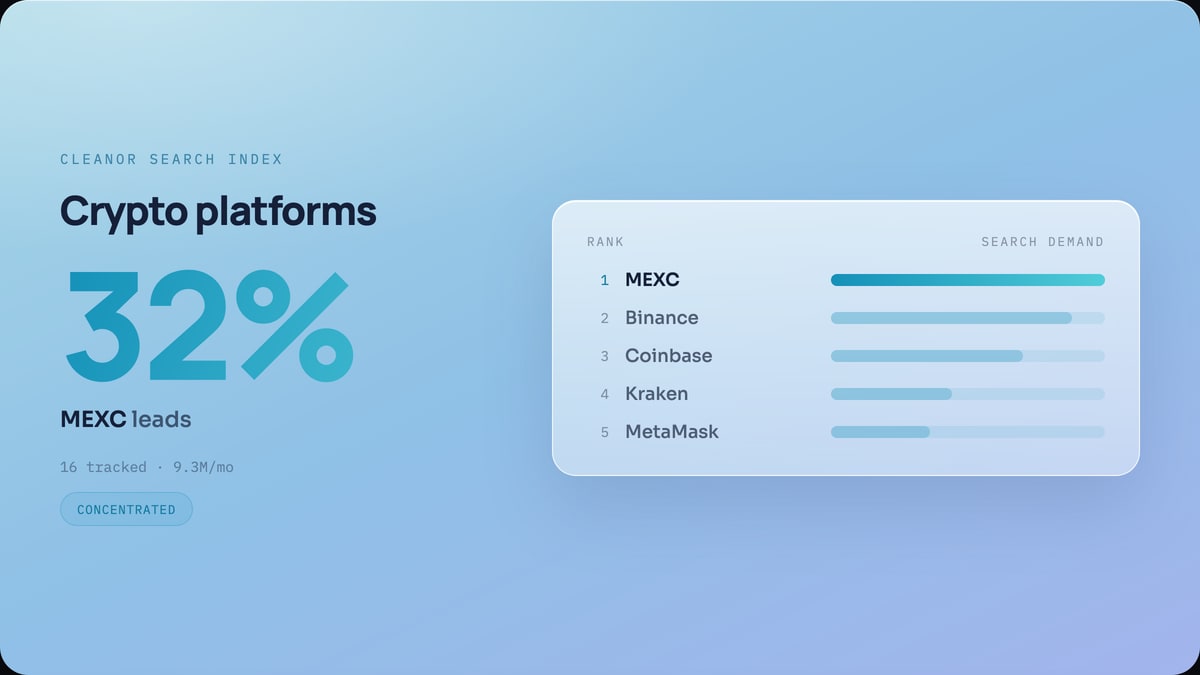
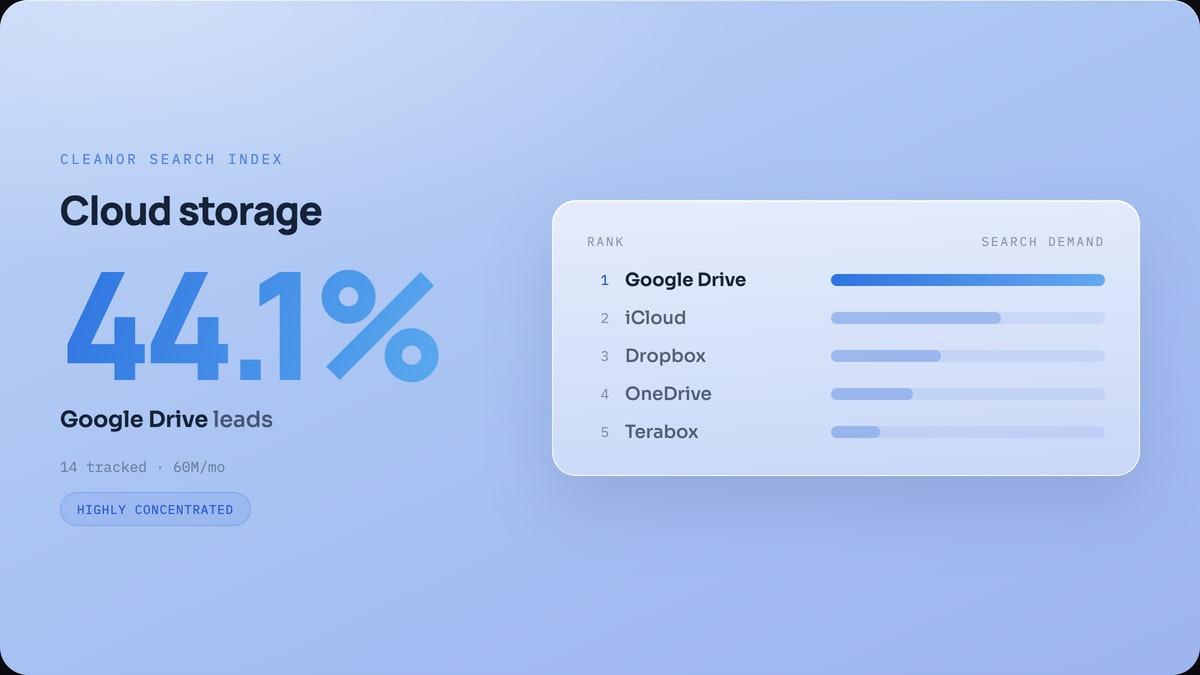
How it works
Each study tracks one head search term per item via the Google Keyword Planner historical-metrics API, snapshotted every month across 20 countries. Because Keyword Planner only exposes a rolling 12-month window, we capture and commit a snapshot each month, building the long history that Google itself does not publish. The config, pipeline and every snapshot are open source, so anyone can reproduce the numbers or add a new topic.
Frequently asked questions
Where does the search data come from?
Google Keyword Planner. Each item in a study is tracked through one head search term via the historical-metrics API, and we snapshot the numbers every month across 20 countries. These are real search volumes, not estimates from a third-party SEO tool.
How often is it updated?
Monthly. Keyword Planner only exposes a rolling 12-month window, so we capture and commit a snapshot every month. That is how the index builds a long history Google itself does not publish.
Can I download and reuse the data?
Yes. The config, the pipeline, and every monthly snapshot are open source on GitHub, and the dataset is mirrored on Kaggle, where it holds a Bronze medal from the community. You can reproduce a number, cite it, or add a topic of your own. The data is free to use with attribution.
Why does the crypto study track exchanges and wallets, not coins?
Keyword Planner withholds volumes for crypto assets themselves, so a Bitcoin or Ethereum ranking would be built on missing data. Exchanges and wallets (Coinbase, Binance, MetaMask and the rest) return real volume, so that is what the study measures.
What does "highly concentrated" or "competitive" mean on a study?
It is the Herfindahl-Hirschman Index (HHI) of the category, the standard measure of how concentrated a market is. Above 0.6 we call it a near-monopoly, 0.25 and up is highly concentrated, 0.15 and up is concentrated, and anything below that is competitive.
Is search demand the same as market share?
No, and the difference matters. Search demand measures how many people look a product up on Google, which tracks attention and intent rather than installed base. A tool everyone already has can be searched for less than a tool everyone is curious about. The index is the closest public proxy for usage, not a substitute for it.
Why track only one search term per product?
Because it keeps the comparison honest. Adding every long-tail variation would reward the products with the most name collisions, not the most demand. One head term per item, applied identically to every item in a study, is the only way the numbers can be compared to each other at all.
What does the HHI number on a study mean?
The Herfindahl-Hirschman Index, the standard measure of concentration. Below 0.15 a category is competitive; 0.15 to 0.25 is moderately concentrated; above 0.25 one player dominates. It is what lets a study say "near-monopoly" as a measurement rather than an opinion.
Can I see the data for my own country?
Yes. Every study is snapshotted across 20 countries, and the explorer on each study page switches between them. A leader worldwide is often not the leader locally, which is usually the most interesting thing on the page.